When water crosses the threshold of a home or business, the visible damage is only the start. Stained carpet, warped baseboards, and saturated drywall are immediate and painful to watch, but unseen consequences often matter more. Moisture trapped in cavities feeds mold and bacteria. Volatile organic compounds originally bound in building materials can be released. Dust and particulates settle into the HVAC system and keep circulating. In Mesa, where monsoon season can turn a dry street into a river in minutes, protecting indoor air quality after a flood is not optional, it is urgent.
I’ve been on dozens of flood jobs in the Valley, and the pattern repeats: homeowners focus on what they can see, while microscopic contaminants quietly set up residence. Bloque Restoration approaches water damage restoration in Mesa AZ with an eye toward that invisible threat. The work is not only about drying floors, it is about restoring a breathable, safe interior environment and verifying it with techniques that can be explained to anyone who lives there.
Why indoor air quality becomes the real emergency
Water contact changes the chemistry and biology of a building. Porous materials like drywall, insulation, carpets, and upholstered furniture trap moisture and organic matter, creating ideal habitat for mold and bacterial colonies. Within 24 to 48 hours microbes can start colonizing surfaces and releasing spores into the air. Those spores are what trigger allergic reactions and respiratory problems; in sensitive people they can provoke severe asthma attacks.
Even when mold growth is limited or absent, floodwaters themselves often bring in contaminants from outside — silt, pesticides, sewage, heavy metals — depending on the flood source. When those contaminants deposit into porous building materials, they do not simply dry out and vanish. They can re-enter the air as dust or be carried through the HVAC system. That increases exposure for everyone inside.
Finally, the drying process, if done improperly, can make things worse. Running a high-powered fan without proper containment will stir settled spores and dust and circulate them through the house. Heating without controlling humidity can encourage off-gassing of certain materials. Professional intervention helps avoid these trade-offs: you get rapid drying without collateral contamination.
How Bloque Restoration approaches the problem differently
The difference between a cosmetic cleanup and an air-quality-focused restoration lies in process and priorities. Bloque Restoration organizes the job around three concurrent objectives: eliminate standing water and source contaminants, dry and monitor the building materials, and protect inhabitants from airborne hazards while work proceeds.
First, they treat the water itself as potentially hazardous until testing proves otherwise. If floodwater was driven by storm runoff, a street overflow, or sewer backup, it is treated as category 3 water until tested. That determines the removal methods and PPE used by technicians and influences what materials must be removed and disposed of versus what can be salvaged.
Second, the team emphasizes targeted demolition to reach moisture trapped behind finishes. It is tempting to rip out everything, which can be expensive and unnecessary. Conversely, leaving wet cavity insulation or wet structured wood can trigger mold months later. Experienced technicians identify when a controlled, surgical removal of materials is necessary, and when advanced drying techniques will suffice.
Third, containment and air filtration are a priority. Before major demolition begins, containment barriers and negative air machines are set up to prevent dust and spores from leaving the work area and migrating through the HVAC system. Portable HEPA filtration with appropriate CADR capacities reduces airborne particulates while the job continues.
A concrete example from Mesa
A mid-sized home near Red Mountain had about a foot of water in the garage that migrated under the slab and into the adjacent bathroom during a flash monsoon event. The owners called Bloque Restoration the morning after the storm. The initial inspection found saturated baseboards, wet gypsum behind the tub surround, and mud tracked through the lower level. Most notably, the family reported chronic coughs from one child who has mild asthma.
Instead of immediately restoring surfaces, the crew set up a containment wall at the bathroom doorway and installed two HEPA air scrubbers to pull airborne particles out of circulation while technicians removed the tub surround and a portion of the adjacent wall cavity to access trapped moisture. Moisture mapping used noninvasive meters to track wet pockets; thermal imaging helped find damp areas under floor finishes. Over five days they used dehumidifiers sized to the cubic footage rather than generic rental equipment, monitored relative humidity until it reached safe parameters, and replaced contaminated insulation and baseboards. The child’s cough decreased noticeably within a week. That is a small anecdote, but it illustrates how addressing the air, not only the visible water, produces immediate health benefits.
Key steps Bloque Restoration follows to protect indoor air quality
If you want a concise checklist that captures the priorities technicians use on-site, consider the following sequence. These are the actions that, when executed together, minimize airborne hazards and protect occupants.
- assess and classify water source to determine contamination risk, document findings, and establish PPE and disposal protocols contain the work area and deploy HEPA filtration and negative pressure to prevent cross-contamination remove or treat materials that cannot be reliably dried in place, using moisture mapping and thermal imaging to guide selective demolition dry the structure with properly sized air movers and dehumidifiers while monitoring humidity and moisture levels until thresholds are met validate air quality through visual inspection, moisture readings, and, when needed, particle and microbial testing
No single step is sufficient alone. Containment without correct demolition leaves wet materials behind. Drying without filtration stirs spores into the whole house. Testing without action leaves occupants at risk. The Water Damage Restoration Mesa AZ Bloque Restoration value of an experienced provider is in sequencing these actions correctly and adapting when the job throws an unexpected problem.
Measuring what matters: humidity, moisture content, and particle counts
Objective measurements save disputes. Bloque Restoration documents three types of numeric data during every job. Relative humidity is monitored in the work area and adjacent living spaces; the team aims for stable relative humidity below 50 percent during drying and verifies it remains stable after equipment removal. Moisture content readings on wood and gypsum are recorded to industry-accepted baselines; wood is generally considered dry when moisture content falls into the single digits to low teens depending on species and thickness. Finally, when indoor air quality is a concern, particulate counts and specialized microbial air or surface sampling are ordered and compared to baseline outdoor counts.
Those numbers influence decisions. If the particle counts remain elevated despite filtration, technicians will tighten containment, increase air changes, or expand demolition to remove contaminated finishes. If moisture readings show pockets of trapped water, targeted access holes or controlled demolition will be recommended. Billing records and photos accompany every set of measurements so the homeowner can see the progression.
Trade-offs and judgment calls: what can be saved, and what should go
One of the trickiest aspects of restoration is deciding what is salvageable. Carpeting, for example, often holds sentimental and financial value, but if contaminated with category 3 water or soaked for more than 48 hours, it becomes a liability. Upholstered furniture is similar; its foam cores trap water and contaminants and rarely dry to a safe level once contaminated.
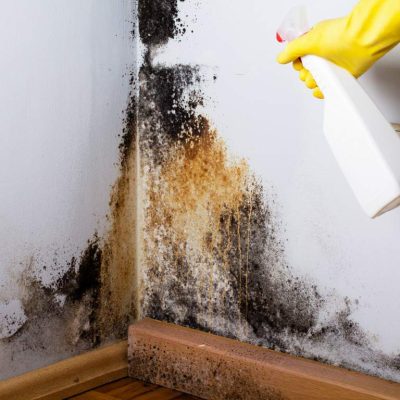
The more you save, the greater the risk of hidden residual contamination. The more you remove, the higher the cost and the greater the disruption. Bloque Restoration helps clients make these decisions through transparent cost-benefit discussions and by offering containment and odor control measures that can reduce demolition in borderline cases.
Edge cases matter. In a commercial setting with archival materials or live electrical infrastructure, decisions weigh health risks against operational continuity. In a multiunit building, preventing cross-contamination to adjacent units can justify more aggressive containment even if the original unit’s damage seems minor.
Dealing with HVAC systems and ducts
An often-overlooked vector for airborne contamination is the HVAC system. Flooding will not always inundate ducts directly, but dust, spores, and soot can be drawn into the system during flood cleanup. Bloque Restoration treats HVAC systems proactively. Before running the system again, filters are replaced with higher-efficiency types, the interior of accessible ductwork is inspected and cleaned if contamination is suspected, and the system is balanced so it does not pressurize contaminated zones.
If the air handler was in a flooded mechanical room, more extensive remediation or replacement may be required. Professionals also consider damp coil pans and insulation around ducts. Wiping down accessible components and using inline UV or upgraded filtration can help, but these are supplementary to source control and containment.
Communication and occupant safety during restoration
Worksites with heavy equipment and containment measures are naturally disruptive. Bloque Restoration places a priority on communicating risk and timelines to occupants. Technicians explain what the barriers mean, where it is safe to move, and when the HVAC should remain off to avoid spreading contaminants. Families with immune-compromised members or pets receive tailored plans, including temporary relocation when necessary.
I remember a case where an elderly homeowner refused to leave because of mobility concerns. The team adjusted workflow, moved containment to minimize disruption in the living area, and used additional HEPA filtration near the living room. They also arranged for daily medical check-ins to monitor symptoms. The homeowner kept most of her care routine intact and reported fewer issues than she feared. That kind of pragmatic flexibility matters in real-world jobs, where the ideal plan sometimes needs tailoring to the people involved.
Testing and verification: proof that the air is safe
Not every flood job requires laboratory testing, but when occupants report symptoms, when visible contamination was widespread, or when commercial clients demand documentation, Bloque Restoration uses third-party testing. Particle counters provide immediate snapshots; microbial sampling and laboratory analysis deliver more definitive answers about species and concentrations. Results are interpreted against outdoor baselines and health guidelines; for mold, species identification helps determine whether problems come from an indoor source or are simply outdoor background.
Documentation is also legal protection. Insurance adjusters, landlords, and property buyers all benefit from clear reports showing the steps taken and the air quality measurements achieved.
Preventing recurrence: construction and design adjustments
Mesa’s weather patterns make flood resilience partly a design problem. After cleanup, Bloque Restoration advises on changes that reduce future indoor air risks. Simple measures like raising electrical outlets, regrading a yard to divert runoff, and installing water-resistant backer board in bathrooms reduce future exposure. For larger investments, they recommend flood-rated doors, improved drainage systems, or relocating mechanical equipment out of basements or garages.
Some homeowners prefer surface-level fixes that look attractive but do not address the root cause. A low-cost rip-out and new carpeting will improve appearance but leave the house vulnerable if the underlying moisture pathways are not corrected. Professional restoration pairs immediate repairs with practical upgrades that lower long-term air-quality risk.
Cost expectations and timeframes
A transparent conversation about cost and timeline builds trust. For a typical single-family home with a localized flood and minimal category 3 contamination, expect at least several days for extraction, drying, and monitoring. More complicated jobs that require demolition or HVAC remediation will extend to one or two weeks or longer. Costs vary widely based on extent of damage, materials affected, and whether microbial testing or reconstruction is required. Bloque Restoration provides itemized estimates and explains which parts of the job are essential for health and which are cosmetic.
If your priority is to restore normal appearance quickly, be prepared for the risk that cutting corners on containment or testing could create latent problems that are more expensive later. Spending a little more up front on proper air-quality protection often saves money and stress down the line.
How you can prepare and what to expect on the first visit
When you call for help, have the following information handy: where the water came from, how long ago the intrusion occurred, whether the water smelled, and whether anyone in the space has health conditions that require special precautions. On the first visit, water removal near me expect a walkthrough, moisture mapping, and immediate actions like water extraction and setup of containment and filtration. The crew will take photos and set a monitoring plan with scheduled check-ins.
If you are deciding between DIY and professional restoration, remember that extraction and surface drying are useful first steps but not substitutes for professional containment and moisture mapping. If contamination is suspected, call professionals who can test and offer a documented plan.
Final persuasion: why this matters for Mesa residents
Mesa homeowners live with different risks than places with consistently high humidity. The region’s monsoons deliver intense bursts of water that can produce sudden, localized damage. That pattern means events are often clean water at first but can quickly turn contaminated from surface runoff and sewer overloads. A restoration team that understands local weather, common failure points in Southwestern building practices, and the health consequences of airborne contaminants will do more than repair surfaces. They will restore a home that you can breathe in.
Bloque Restoration brings that local experience to bear, prioritizing air quality while balancing costs, timelines, and the needs of occupants. Their approach is not theatrical. It is detail-oriented: measuring moisture, isolating contaminants, sizing dehumidification to the actual cubic footage, and verifying results. If you have recently experienced flooding in Mesa, demand documentation of air-quality measures as well as photographs of removed materials. Insist on HEPA filtration during remediation and on a monitoring plan that demonstrates safe humidity and moisture levels before you consider the job done.
Floods are messy, but with the right process you can recover a space that is not only dry to the eye, but healthy to live in. That is the difference between simply cleaning and truly restoring indoor air quality.
Bloque Restoration
1455 E University Dr, Mesa, AZ 85203, United States
+1 480-242-8084
[email protected]
Website: https://bloquerestoration.com